RUST & SCALE
Evaluate rusted chassis, frames, attachments and industrial steel where substantial deposits need removal.

Abrasive blasting is often the practical choice for heavy corrosion, stubborn coatings and large steel surfaces—especially when the next step calls for a defined coating profile.
TRUCKS · TRAILERS · INDUSTRIAL STEEL · HEAVY EQUIPMENT
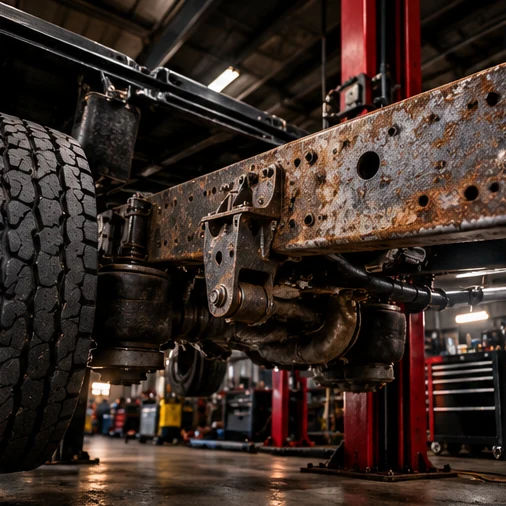 ILLUSTRATIVE INDUSTRIAL STEEL IMAGE
Some steel needs more than selective cleaning. Blasting uses abrasive media and compressed air to remove corrosion, scale and failing coatings while establishing a surface texture appropriate to the job.
Evaluate rusted chassis, frames, attachments and industrial steel where substantial deposits need removal.
Remove failing paint and compatible thick coatings with a method matched to substrate thickness and surrounding components.
Prepare properly selected steel for a coating system where specified cleanliness and surface roughness are required.
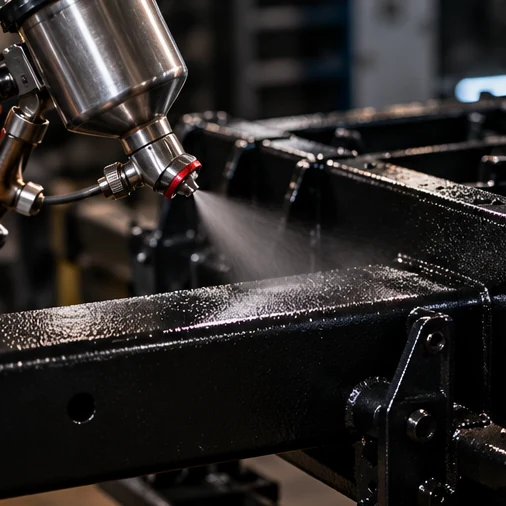
Blasting is only one stage of corrosion control. Surface cleanliness, soluble salts, environmental conditions and coating compatibility all influence the finished result. Explore protective coatings for suitable prepared steel.
EXPLORE PROTECTIVE COATINGSAbrasive blasting can win on speed and surface profile; pulsed laser cleaning may make sense for detailed, selective work or where introducing abrasive media is undesirable. Compare both approaches before deciding.
SEE THE METHOD COMPARISONSend photos, location, dimensions, coating history if known, and the desired finish. Equipment and service availability are subject to job evaluation and appropriate safety, environmental and insurance arrangements.